FACES
Christoffer Eglund Gallery.
1-29 May. Copenhagen, Denmark
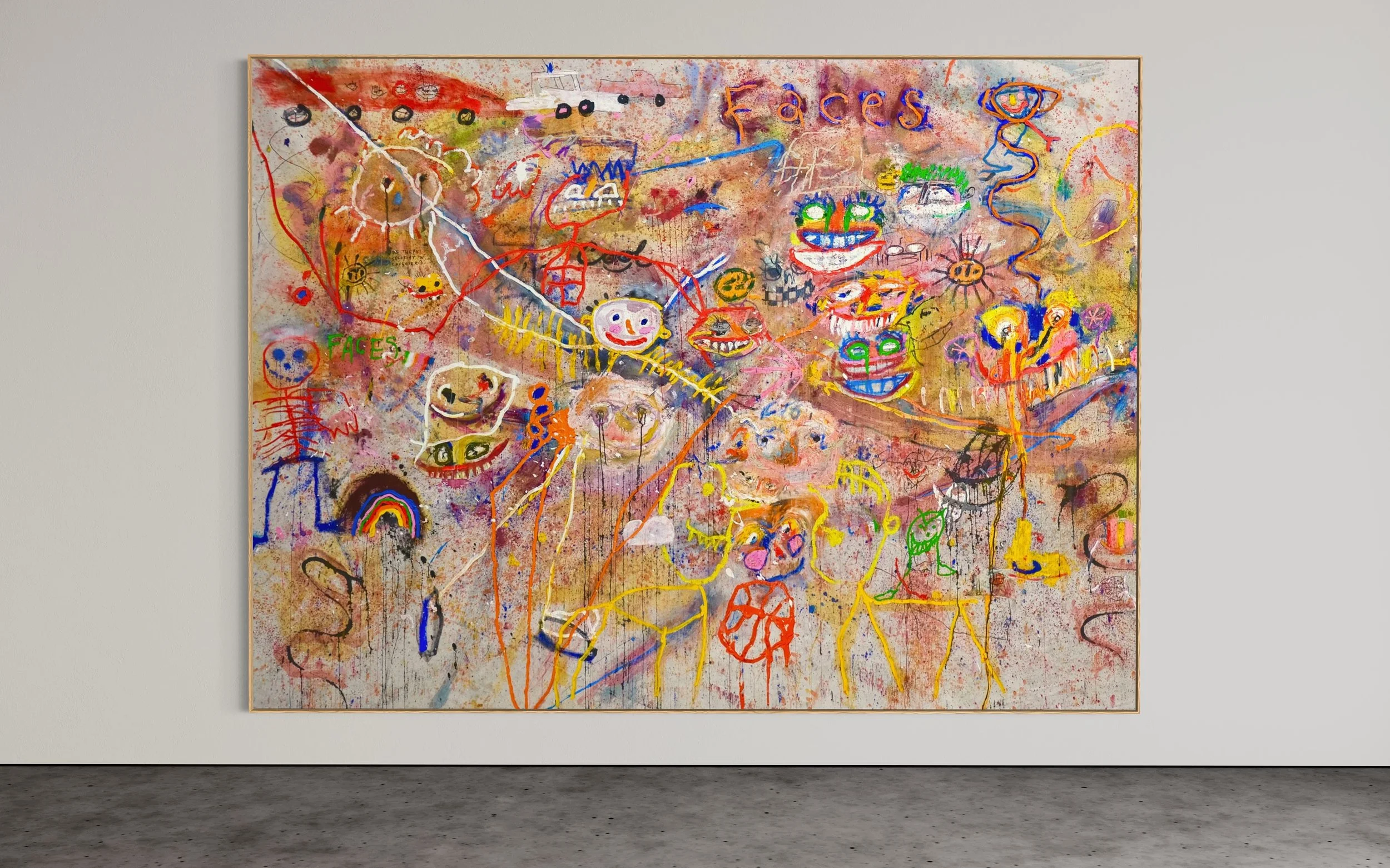
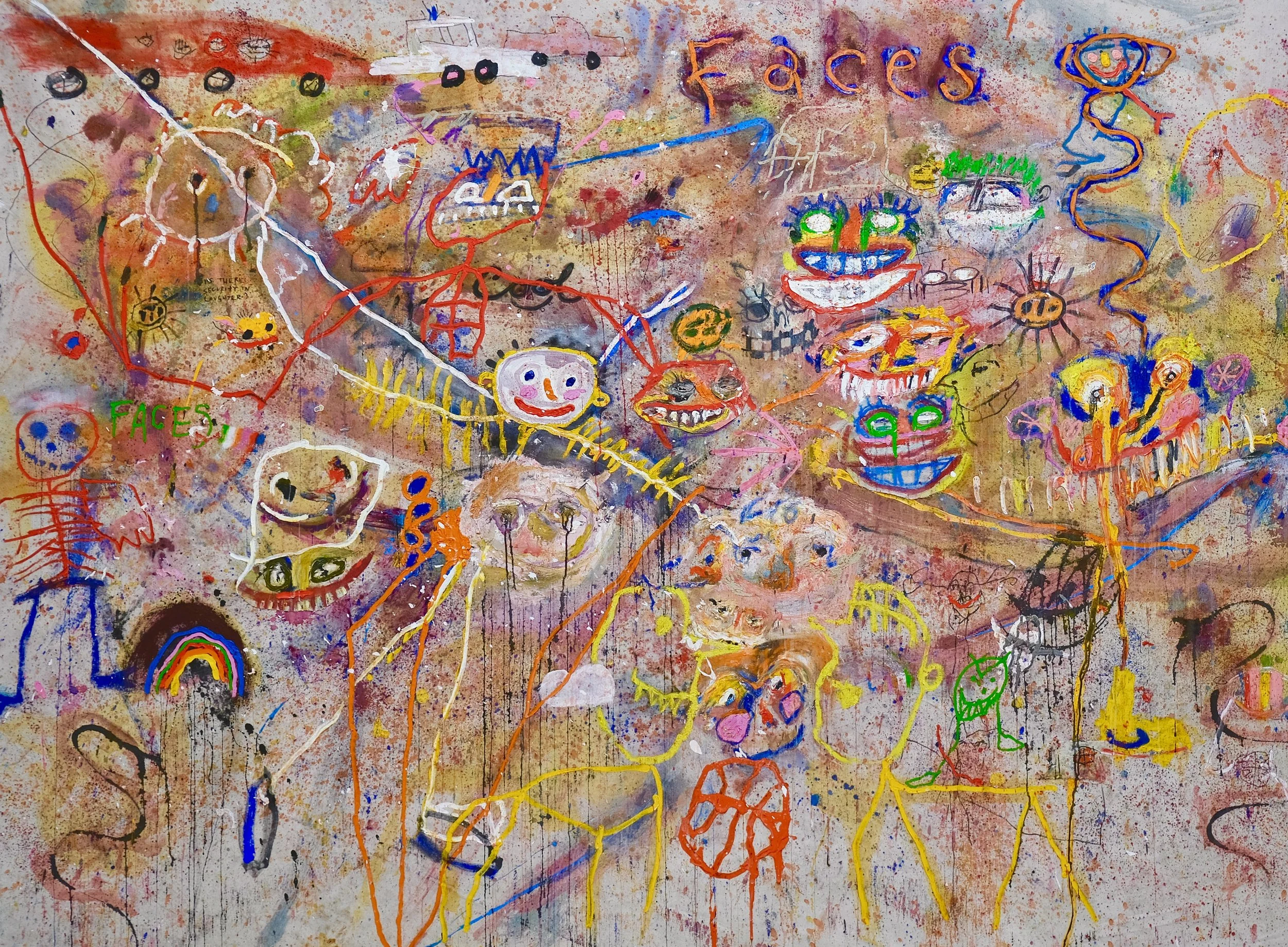
Saxon Quinn’s latest body of work, FACES, marks his second exhibition with Danish gallerist Christoffer Eglund. Bold, instinctive and emotionally charged, the works are influenced by the late Danish artist Asger Jorn, intertwined with Quinn’s own evolving language of faces and masks.
Across the series, faces emerge, dissolve and collide—never fixed to a single identity, but instead reflecting something broader and more collective. Like Jorn and the CoBrA painters, Quinn leans into a raw, childlike approach, prioritising instinct over control. The works convey a sense of speed and intensity, with gestures that feel urgent and alive, offering a glimpse into the artist’s inner world—its surges, its chaos, its clarity.
“Whilst writing the statement for FACES, Luna, my eldest daughter, had me guessing the animals she was drawing,” Quinn says.
“She had drawn beautiful snakes that looked like buses, toucans that looked like a mix of beast, bin chicken and alien.”
Later that evening, Quinn photographed Luna’s drawings to take into the studio—“like a kid cheating in a maths class.” He continues, “The kids are a huge influence on all of the work I do—they help to re-teach the authentic hand and imagination combo.”
At its core, FACES returns to a simple, familiar instinct: the act of seeing faces where they don’t formally exist.
“I remember as a kid lying in my room staring at the pine ceiling boards—I’d see faces in the knots of the wood, eyes, noses and mouths looking like ghoulish possums and other rodents,” Quinn recalls. “Walking down the street, oil stains and scars in the pavements resembling smiling faces—there are faces everywhere waiting to be noticed.”
For Asger Jorn, the face was rarely a portrait of a specific individual, but a shifting symbol of the human condition—grotesque, emotional and constantly in flux. Figures in his work emerge and disappear within layers of paint, reflecting how identity, humour and tragedy are constructed and reinterpreted over time. Similarly, within the CoBrA movement, the face became a primal and psychological device—often distorted or childlike—rejecting polished, rational art in favour of something more instinctive and unrestrained, bridging the conscious and unconscious mind.
Quinn’s works sit within this lineage, yet remain deeply personal. The faces in this series are not depictions of specific individuals, but reflections of shared experience—erratic, deadpan, euphoric, exhausted, and everything in between. They speak to the strange rhythm of daily life, where emotional highs and lows sit side by side, often without warning.
Through this body of work, Quinn invites viewers into that same way of seeing—where meaning is interpreted, forms are unstable, and faces are everywhere.